
issue seventy-two
only monsters butcher gothic classics: “Frankenstein” (2025) review

To tell this story, I have to take you all back with me. On September 23rd, 2023, I piled into a yellow school bus with a number of fellow students, shuttling on our way to see the Indiana Repertory Theatre’s production of David Catlin’s “Mary Shelley’s Frankenstein” for an English department outing. I was generally a fan of IRT’s work, and particularly loved their staging of another literary classic (“Sense and Sensibility”, a delightful production) last season. I definitely hadn’t touched Frankenstein in several years, but soon found myself open to the intrigue, intensity and intellect channeled directly from Shelley’s own words onto the stage that evening.
Catlin’s excellent adaptation is a complex, double-cast mirror, weaving the life and loss Shelley endured with the events of her infamous novel. This production held a new lens to the themes of creation, birth and death Shelley so exquisitely explored in Frankenstein, brought to life by truly incredible performances and staging choices that only drew the audience further into the gothic cloak of that wet, hot summer in Geneva. Anyone who knows me knows that I rave about this play; I saw it twice more during its run with my best friend and intellectual partner Abby Hoehn.
Our spirited discussion of the play after a second viewing - conducted over WingStop, a post-theatre tradition - led to the seed of a fruitful idea: a joint thesis project inspired by Catlin’s exploration of embodied authorship within a given literary text. Shelley had fully taken hold of both of us, and we spent the next two years studying film adaptations of Frankenstein to honor and examine the explicit and implicit roles Shelley plays in versions of her story told by others. You can read the thesis here (and we’d love if you did), finally completed this May before graduation after being fully consumed by Shelley and her eternal creation myth for probably longer than most.
I don’t claim to be an expert, but this journey has absolutely brought Shelley and her creature close to my heart and my brain in an inextricable attachment. I proclaimed 2024 (and thusly 2025 as various goalposts moved) the year of Frankenstein, heralding an era of adaptations with the potential to excite and innovate. Between campy romps like “Lisa Frankenstein”, loose introspective monster tales like “Your Monster”, Maggie Gyllenhaal’s forthcoming period musical “The Bride”, and more, I’ve found the ground of today’s horror storytelling is fertile for new takes on Shelley’s work. Some I find more interesting than others, and some I have my gripes with. Obviously, we’re here to discuss the latter: my review of Guillermo del Toro’s “Frankenstein”, my most anticipated film release of this year.
Abby and I entered our local theater on Friday evening with high spirits and months of anticipation at our back. I was lucky enough to snag tickets to a showing within this month’s limited platform release - one of the many curses of this Netflix production, which I’ll mention later. By the end of the screening, we were both barely holding in hushed laughter and exasperated sighs, truly attempting not to disturb our neighbors while processing the absurdity of the narrative choices we had just seen brought to life. The lights came back up, my bubble of excitement completely deflated, and we walked out to the restrooms on the heels of a fellow attendee whispering to her friend that she “hadn’t expected it to be so graphically violent”. That gave us a giggle too.
I was simply stunned - not speechless, we got a good two hours of complaining done after we left the theater - at the sheer amount of junctions this film faced, turning bold-faced away from the rich path of Shelley’s story and its original themes. I try not to be a purist or a nerd about these kinds of things, but I truly didn’t recognize the story I had just watched. The intimacies of the shame and hubris Victor bore were stripped away, the halting articulation of the Creature’s pain made explicit in giant, bolded, Netflix-red letters. Core narrative beats were omitted or twisted into anticlimactic disfigurations, and the ending. God. Endlessly weepy, with as little subtlety as the preceding 2 hours and just a little extra brow-beating.
In the name of not being a purist, I don’t want to anchor my critique today on how “accurate” a given film adaptation of a book can be. I truly do welcome the endless possibilities of translation across mediums, and acknowledge the difficulties that come with that process. But I believe that those changes must be earned, or at least justifiable. The mutations between Shelley’s novel and del Toro’s film are those which strip context, explain away subtext, and eliminate what truly makes her narrative one of our best creation stories - not to mention a groundbreaking foundation for a genre in and of itself. I could honestly argue that del Toro’s body of work wouldn’t exist if not for Shelley, a line of thought which makes me question why he was so devoted to telling this story this way for so many years.
After dissecting it, I find that “Frankenstein” is unearned in that its departures from the novel, or even prior film iterations, significantly weaken the story. A Victor who presents as an aging, showboating maverick backed by arms funds to endlessly, publicly experiment is simply not as compelling as a grieving student, wracked by obsession and shame while blinded by youth. A Creature who has the opportunity to explain every grievance he endured to his creator in a sentimental confession on the latter’s deathbed, is not so formidable a haunting figure as he is in the novel. Tying Elizabeth and (an adult) William’s fates together in an estranged arrangement, presumably in an attempt to demonstrate Victor’s shamelessness, is a disservice to Elizabeth’s significance to Victor as well as William’s. Several WWE Smackdown-style confrontations that stagger through an abominably paced second half suck all the life - pun intended - out of Victor and the Creature’s relationship, such that by the time the film limps to its conclusion, all sense of gravity has been lost.
Ultimately, del Toro’s “Frankenstein” rejects the subtle mastery of philosophical and theological discourse Shelley infused her novel with. Instead, a ham-fisted Oedipal narrative is painted over the tapestry of flawed, real characters Shelley wove, leaving few traces of the gothic dread and vulnerable understanding centuries of readers have taken away from the book.
This isn’t to say that I wholly reject this adaptation. There are few bright spots, those which are to be expected from a del Toro film: sumptuous costumes, a sense of groundedness on set that only real craftsmanship can yield, and a theatrical experience that makes one mourn this film’s fate to be shuffled to the bottom of the algorithmic pile in a week or two. Simultaneously, this script would also make one wonder if it was subject to infamous “secondary-screen” review, given that every idea seems to be articulated directly to the viewer’s face in terms simple enough for kindergarteners.
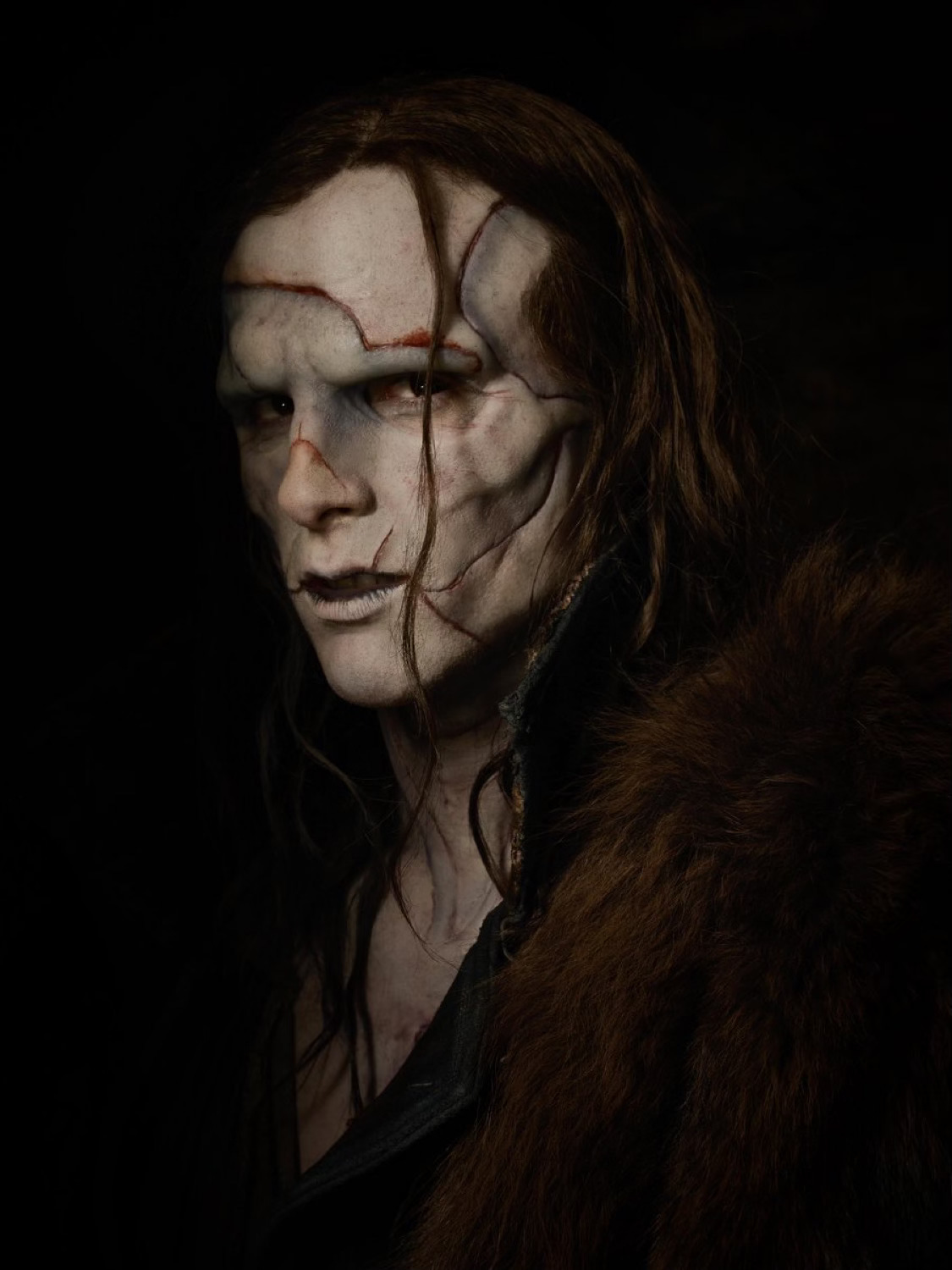
Ultimately, I walked away with one highlight: Jacob Elordi’s performance as the Creature. His embodied approach was genuinely moving, and I felt a significant lump in my throat watching the Creature move through the world with understanding and an intelligence many other versions disregard. Many scoffed, but I knew the Eucalyptus Man was more than prepared for the task. Much like del Toro, I too saw his soulful eyes in “Saltburn” and was immediately enchanted.
But alas, the cherry on top. Just as I was watching the final scene of the film, waiting for a merciful conclusion. The end card, in gilded scrawl: “And thus the heart will break, yet brokenly live on”.
Abby and I could no longer contain our laughter, and actually lost it. Later, we remarked that it only felt right that an adaptation that so ignored Shelley’s intellectual rigor in favor of orchestrating an overdone patriarchal story of abuse would be bookended by Byron’s words. Not her own, of course. That would be too on the nose.
If you haven’t had your Frankencherry popped yet, or generally don’t care to weigh the book against film adaptations, I say you’ll probably enjoy this. It is a feast for the eyes if not the mind, and a film I hope many people get to see on a silver screen before it vanishes into the streamer void. If you generally value all that is holy about gothic literature, or respect Mary Shelley even an ounce, I’d say skip it. Or wait until you can watch on your Samsung fridge TV while scrolling Reels, as Ted Sarandos intended.